Notes from a City Occupied by Absence
Texts and photos by Eduardo López Moreno
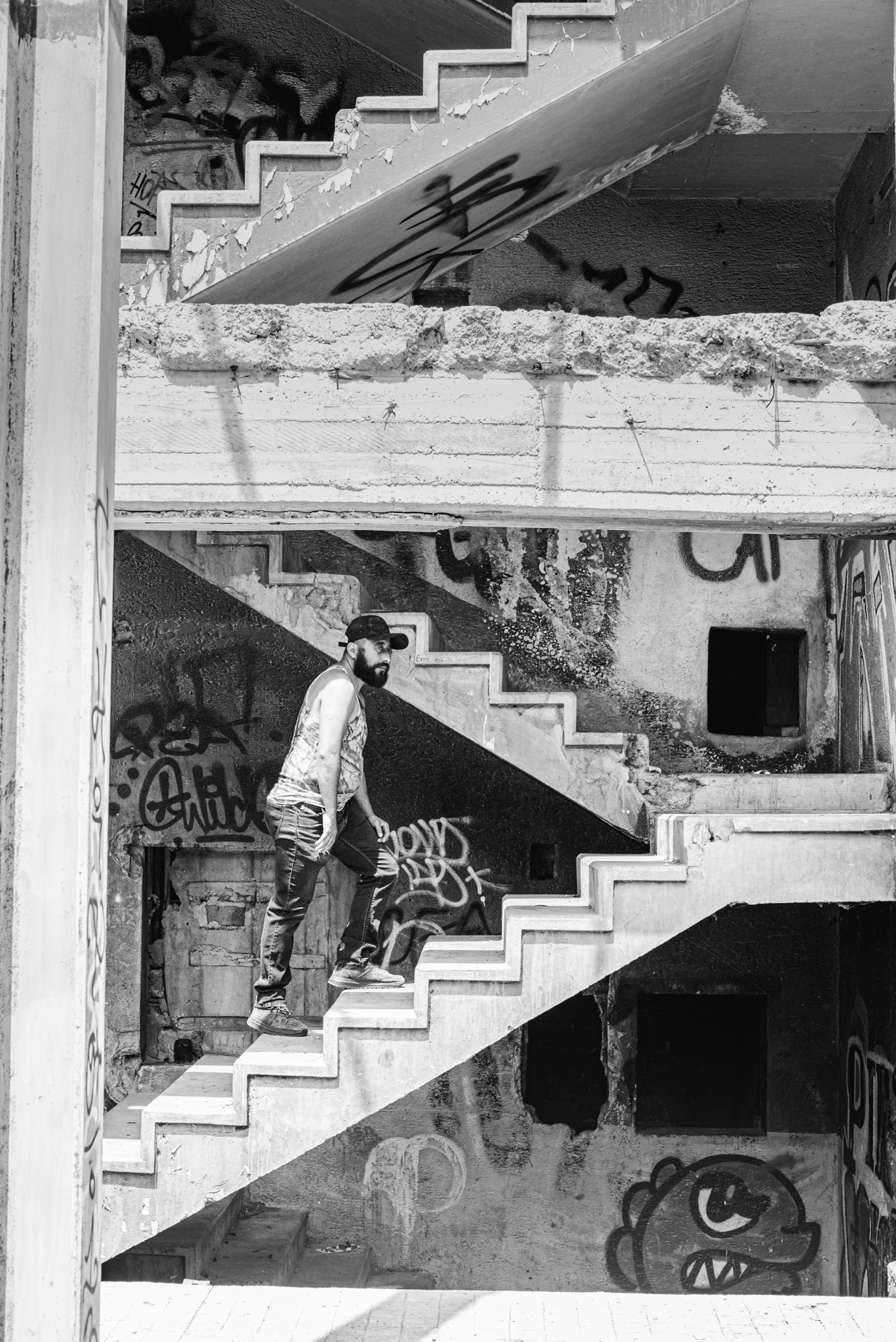
The city was not destroyed.
It was rearranged.
Not by bombs, but by something quieter, more patient:
the slow arithmetic of dispossession.
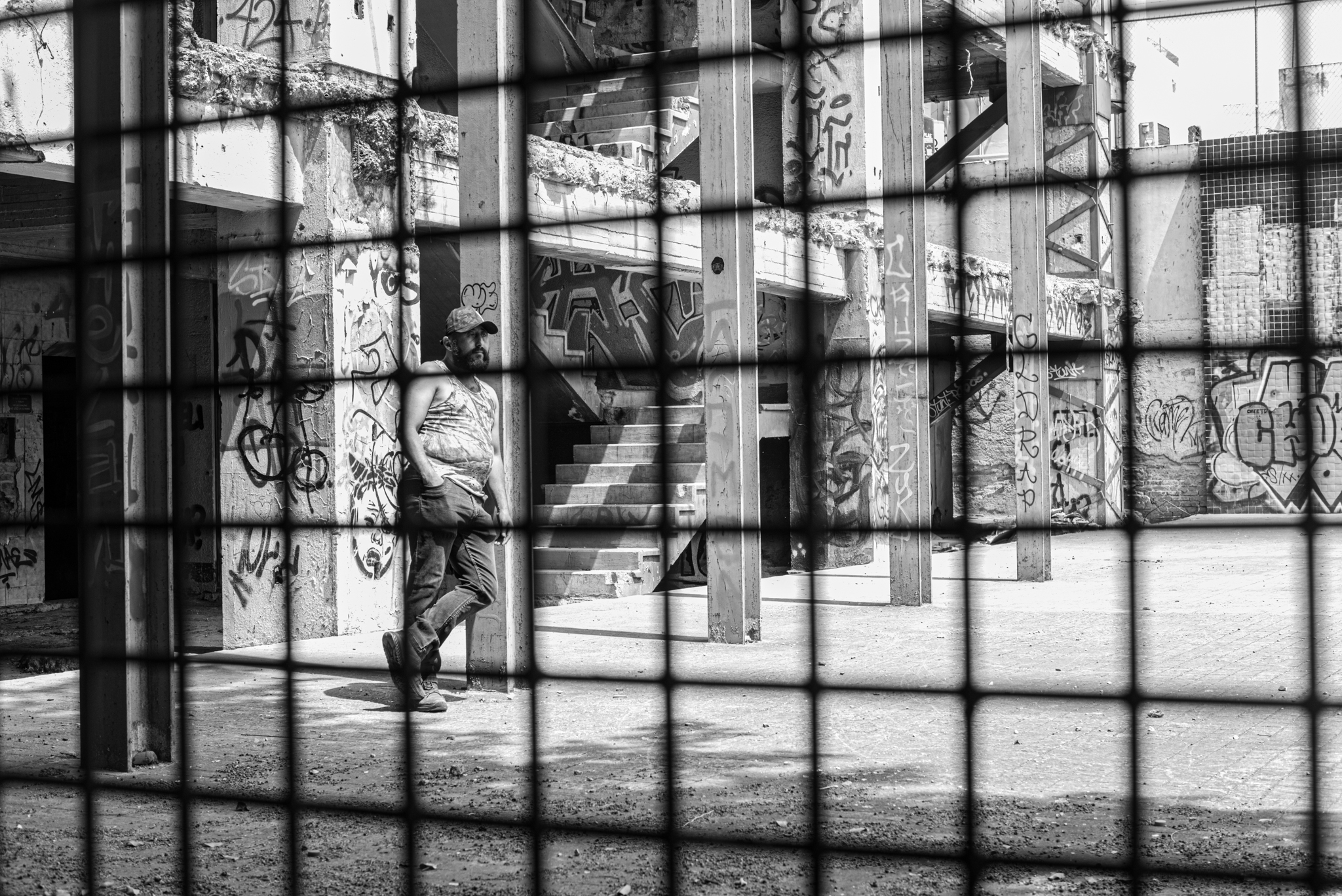
Walls remain. Stairs still climb. Doors still open into rooms where in principle no one should live, but it does.
The geometry is intact. Only the purpose has been removed.
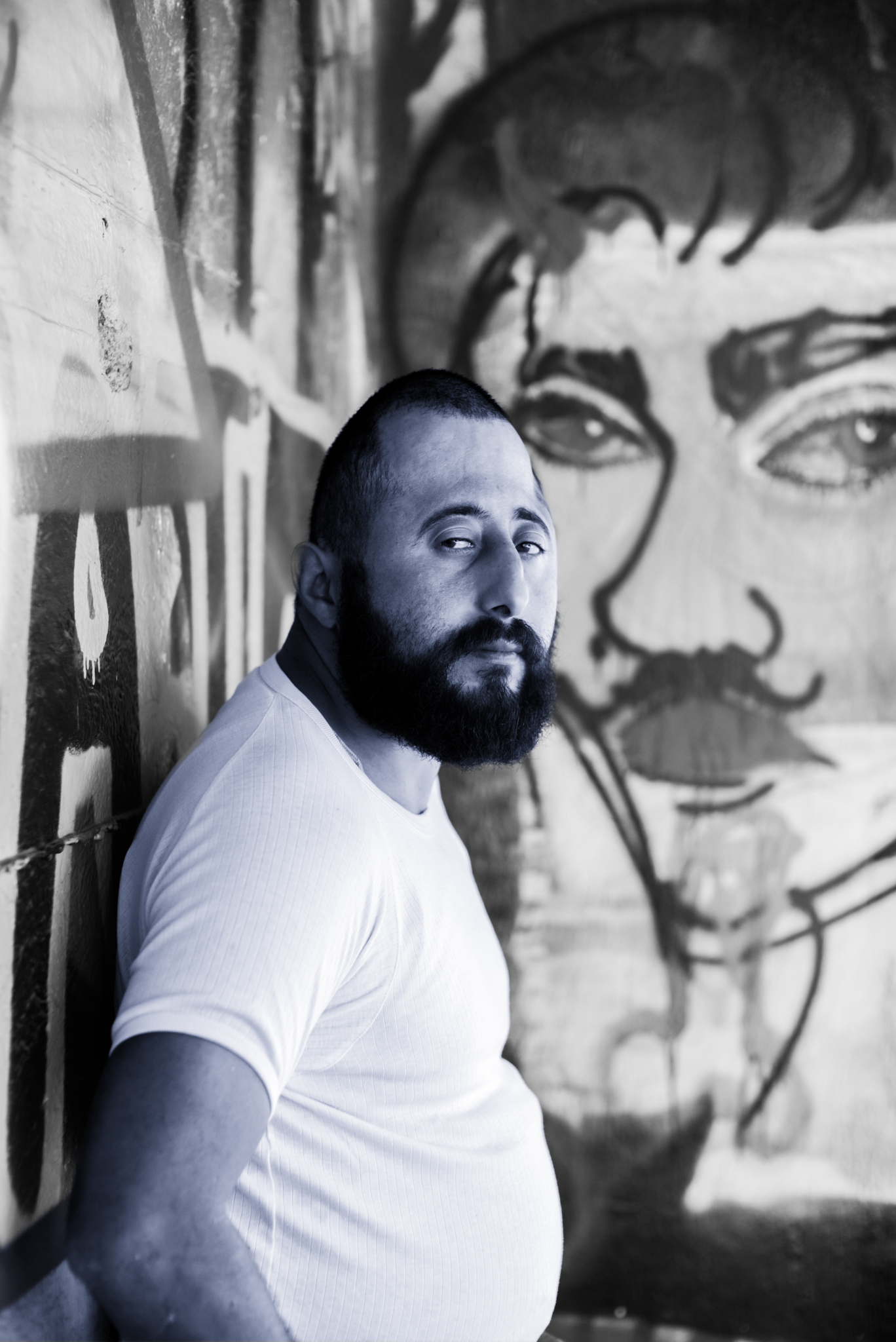
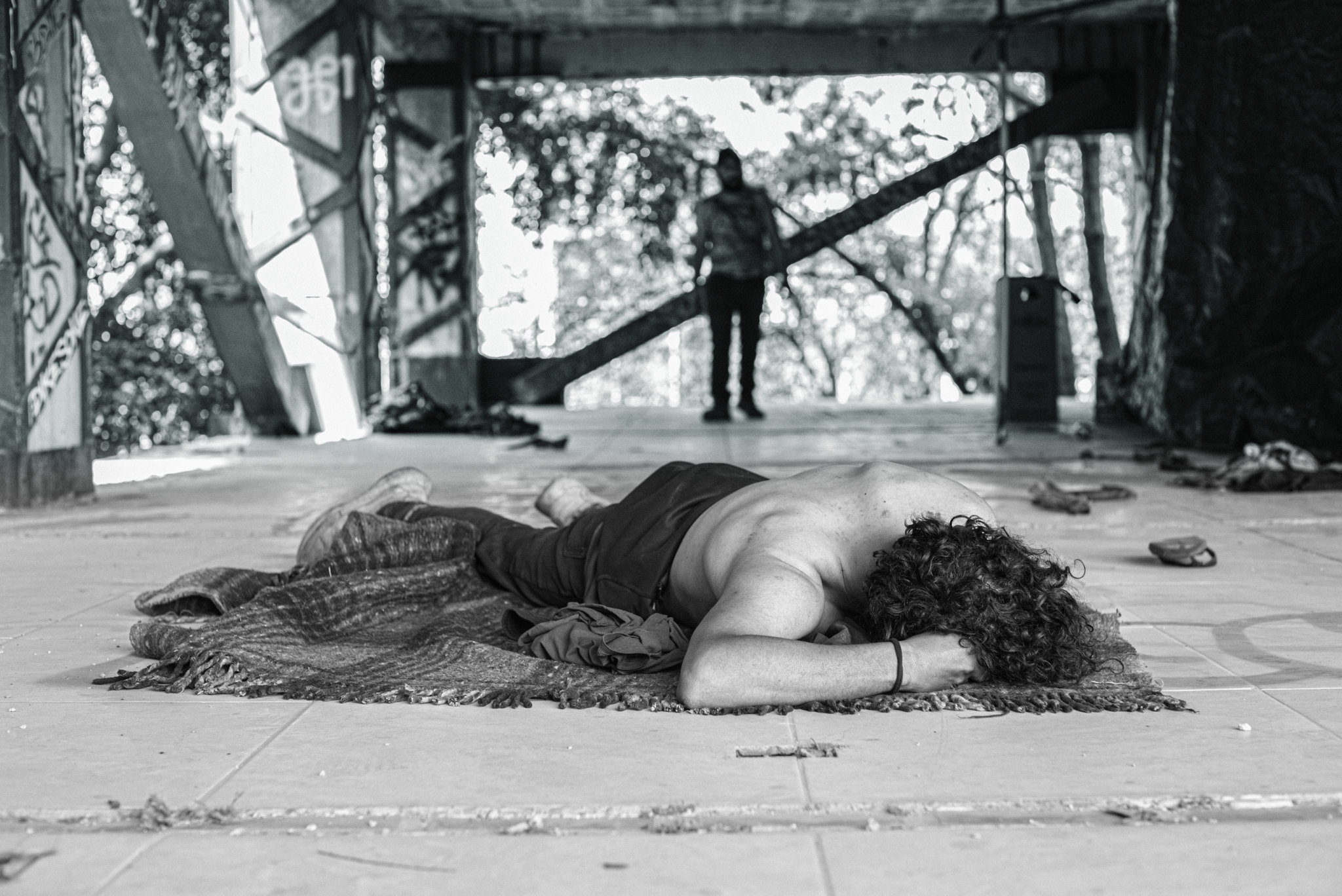
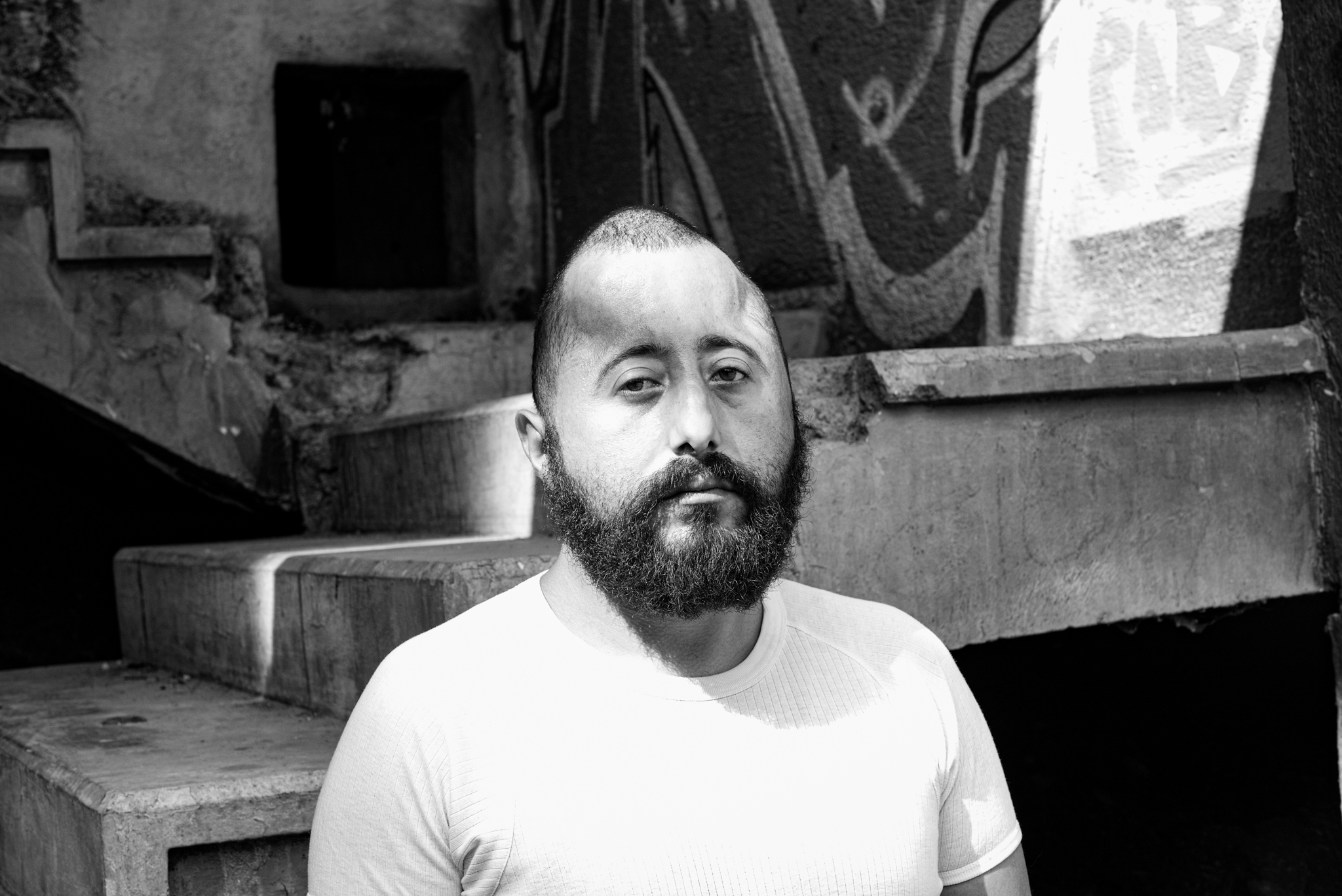
Damian walks inside this architecture as if inside a sentence
that has forgotten its verb.
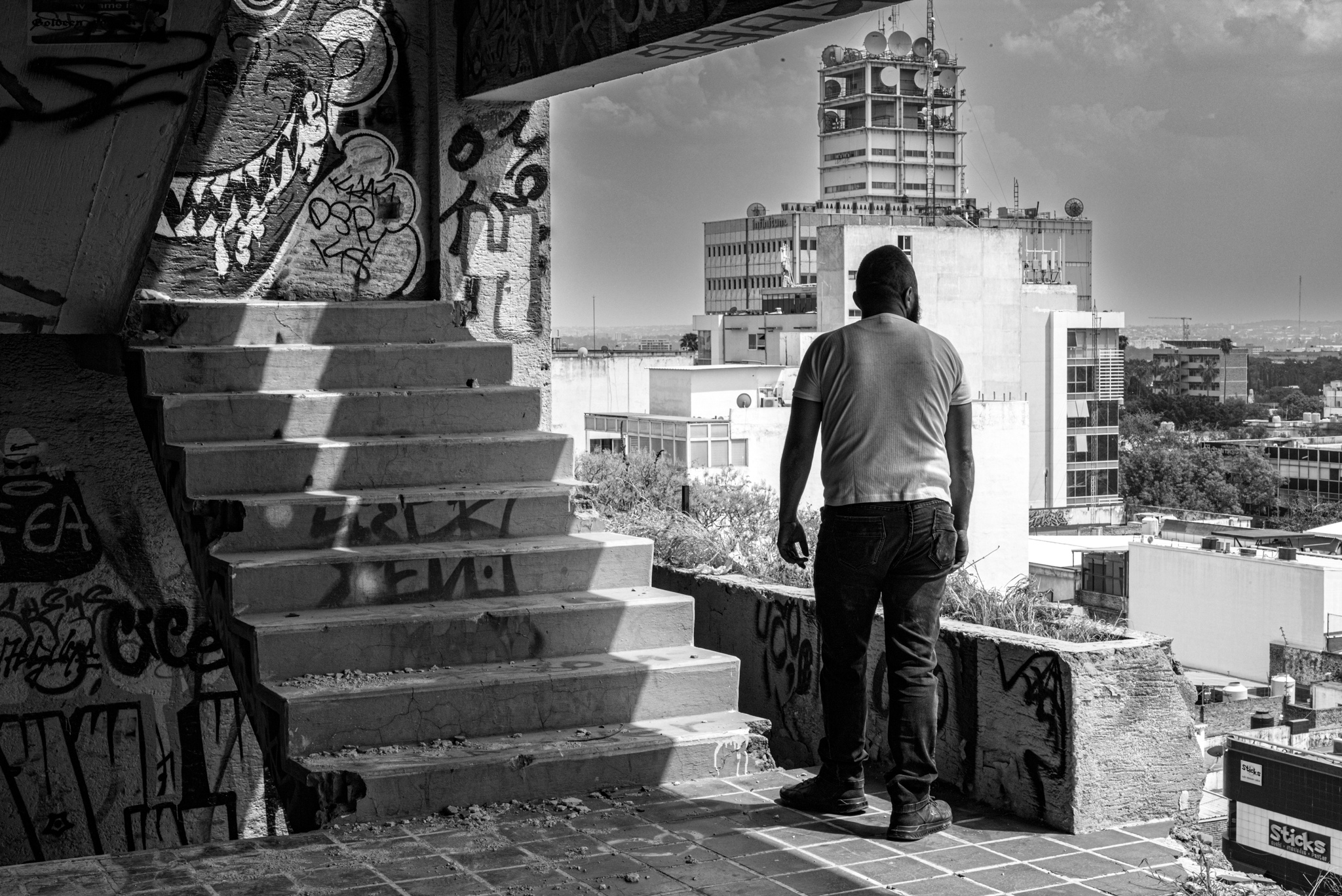
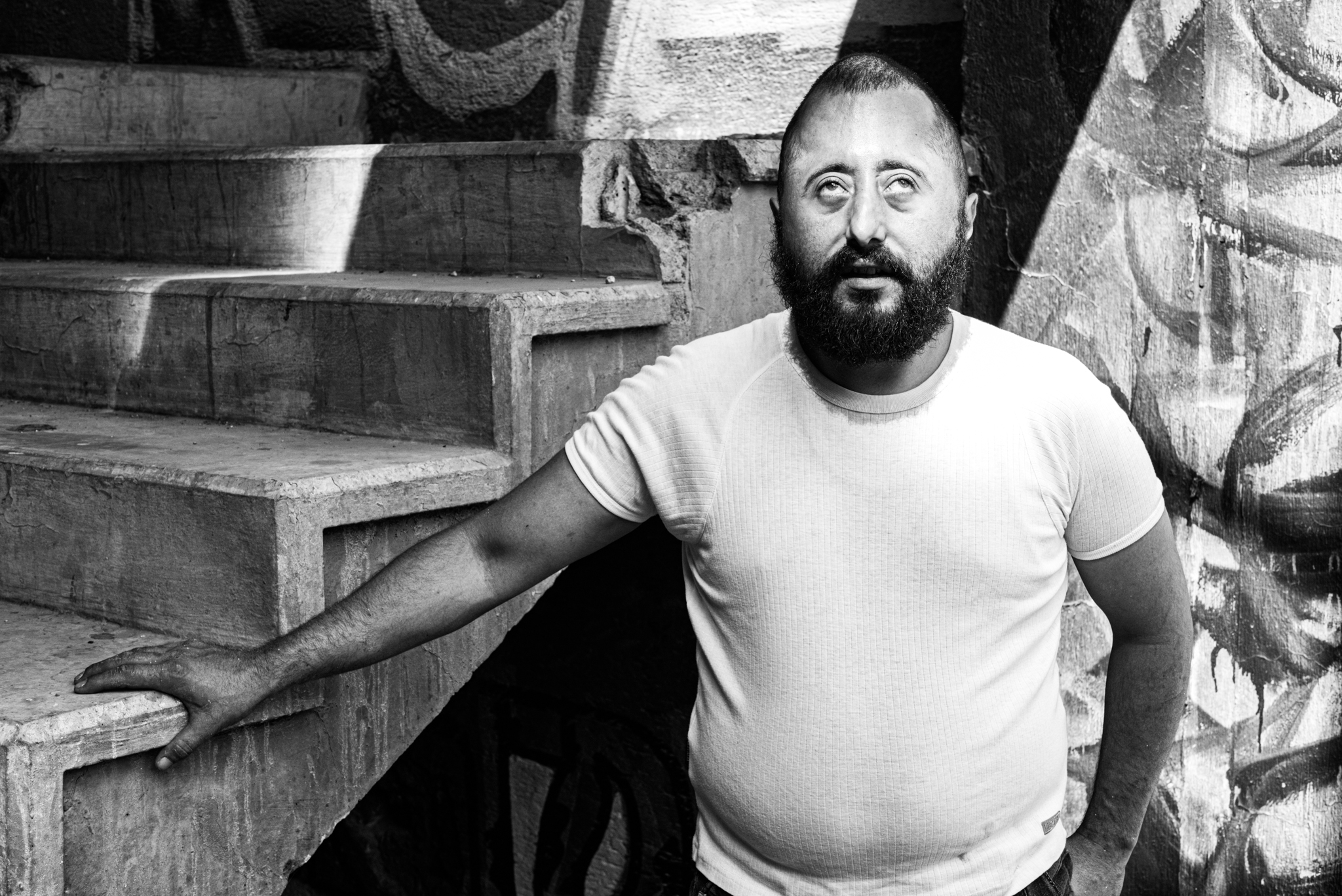
Up and down the stairs—
always the stairs—
a choreography imposed by design,
a vertical discipline of concrete and angles.
Each step a repetition.
Each landing a pause without destination.
From above, the city stretches outward,
a grid of intention,
a map of prosperity promised and withdrawn.
Glass towers shimmer in the distance
like a language he was never taught to speak.
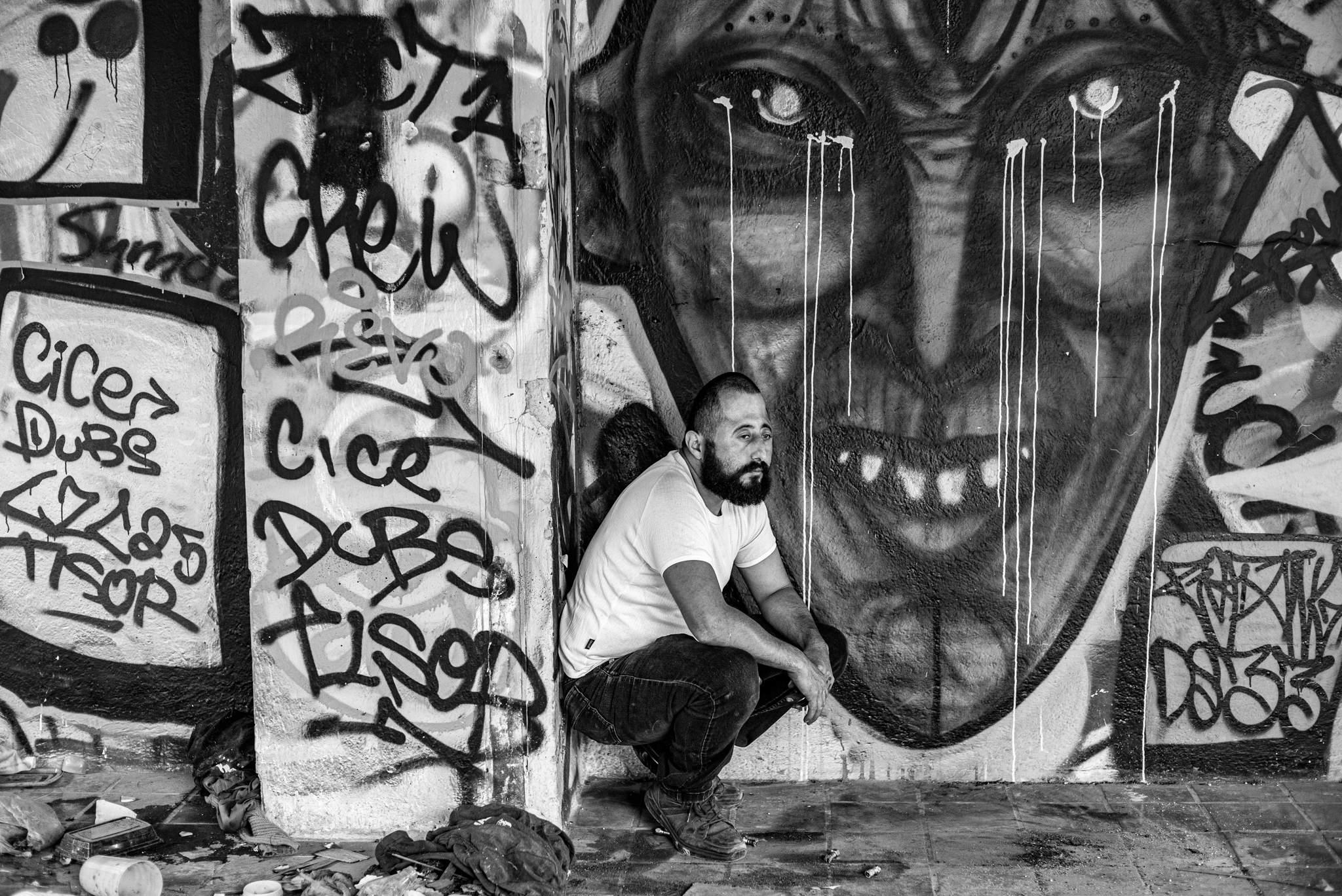
Below, the walls speak instead.
They speak in layers—
names over names,
signatures over erasures,
faces that dissolve into drips and shadows.
A collective murmur of those who passed through,
claiming space in the only way left:
by marking it.
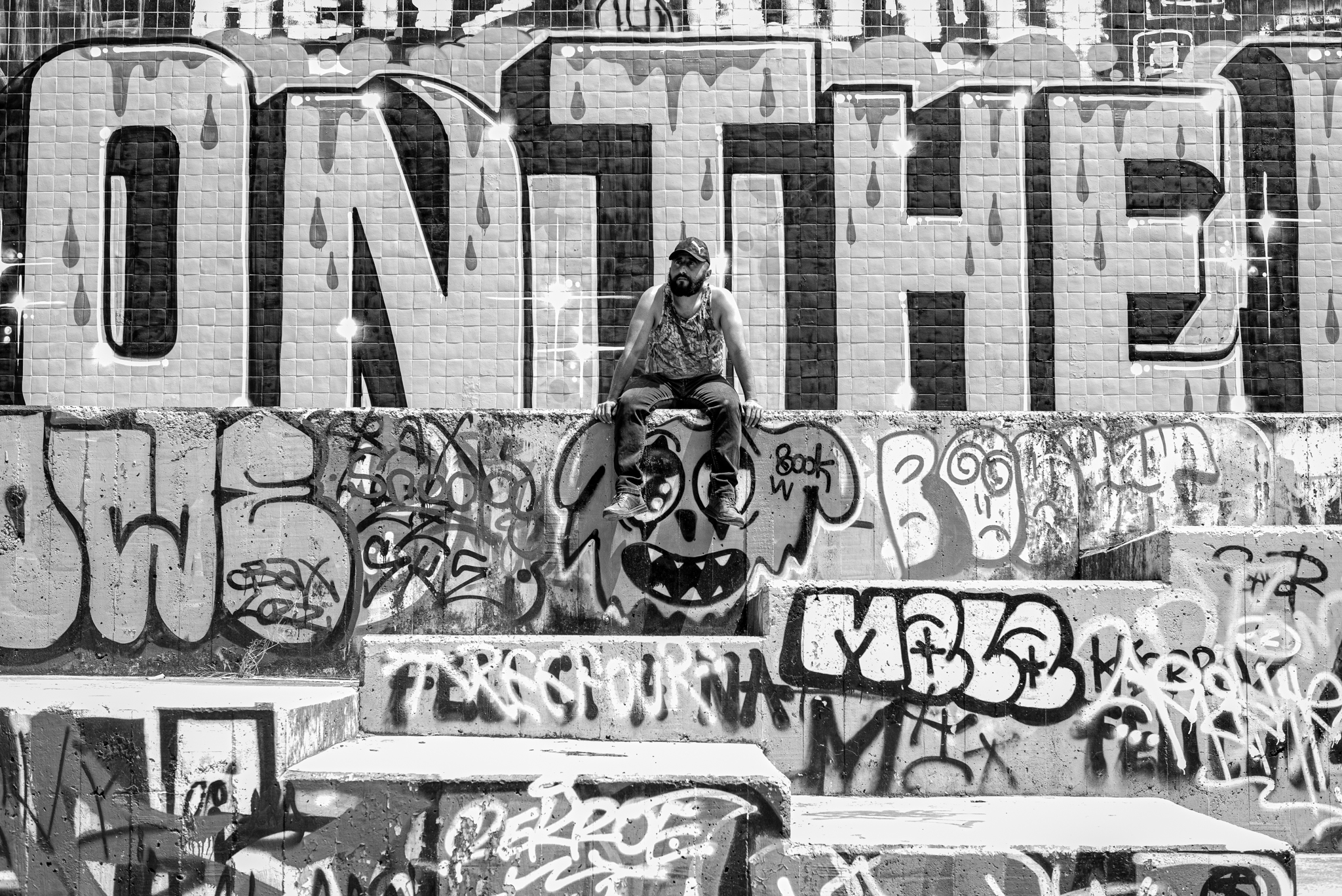
ONE, says the wall behind him.
One what?
One man? One life? One chance?
Or the lie of singularity
in a place designed to divide.
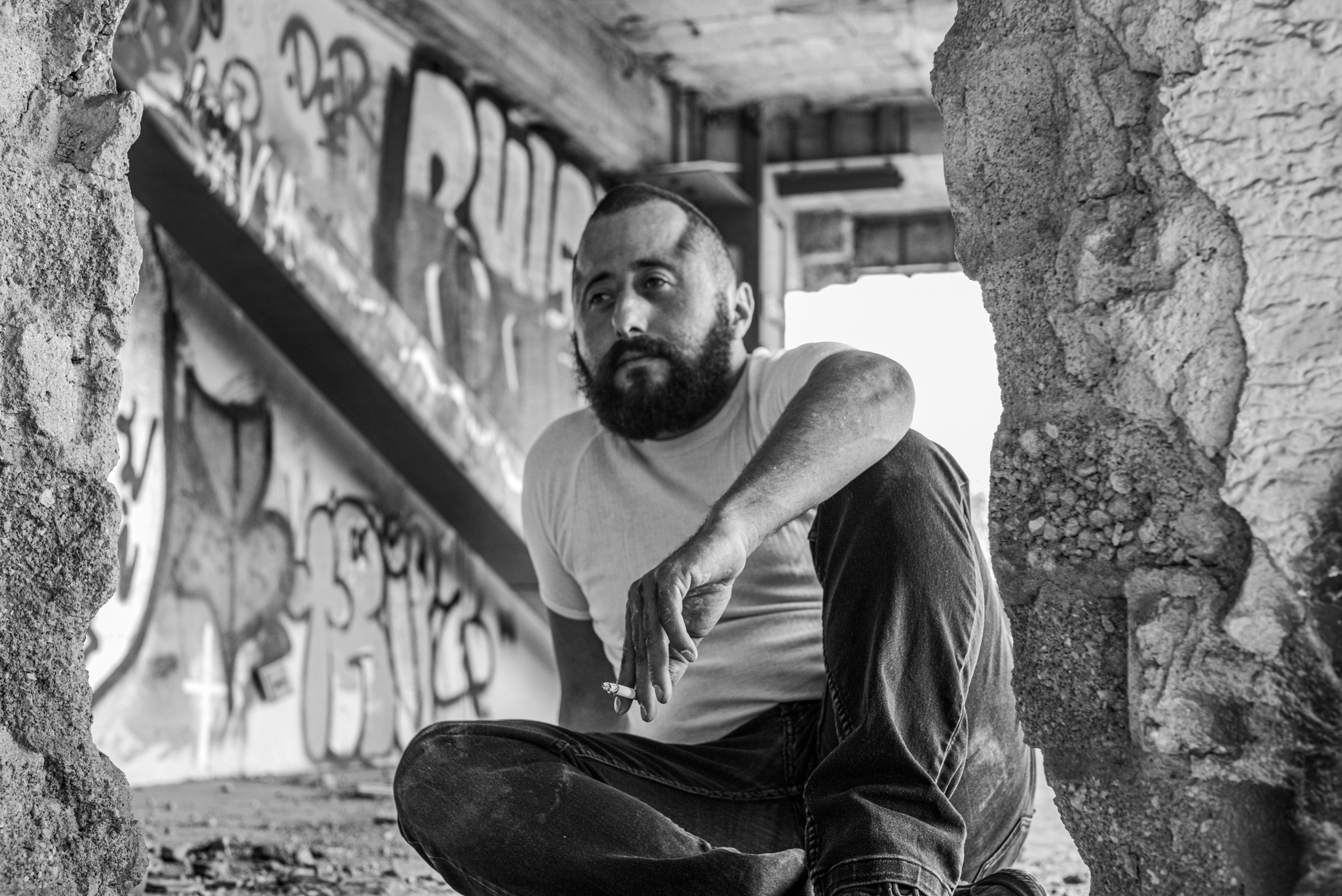
He sits there, between declaration and decay,
a body held briefly in balance
above the sediment of forgotten plans.
This was meant to be something.
A building, perhaps.
A system.
A node in the network of growth.
Instead, it became an interrupted place, and unfinished equation.
Still, it is possible to see the careful spacing,
the alignment of lines,
the promise of circulation.
This is not chaos.
This is abandoned order.