Texts by Eduardo López Moreno®
February 14 is usually staged in red: polished surfaces, predictable gestures, rehearsed tenderness. But love is not decoration. It is exposure. It is risk. It is the moment we step beyond the lines drawn for us and choose proximity anyway.
This selection of images traces not romance, but daring.
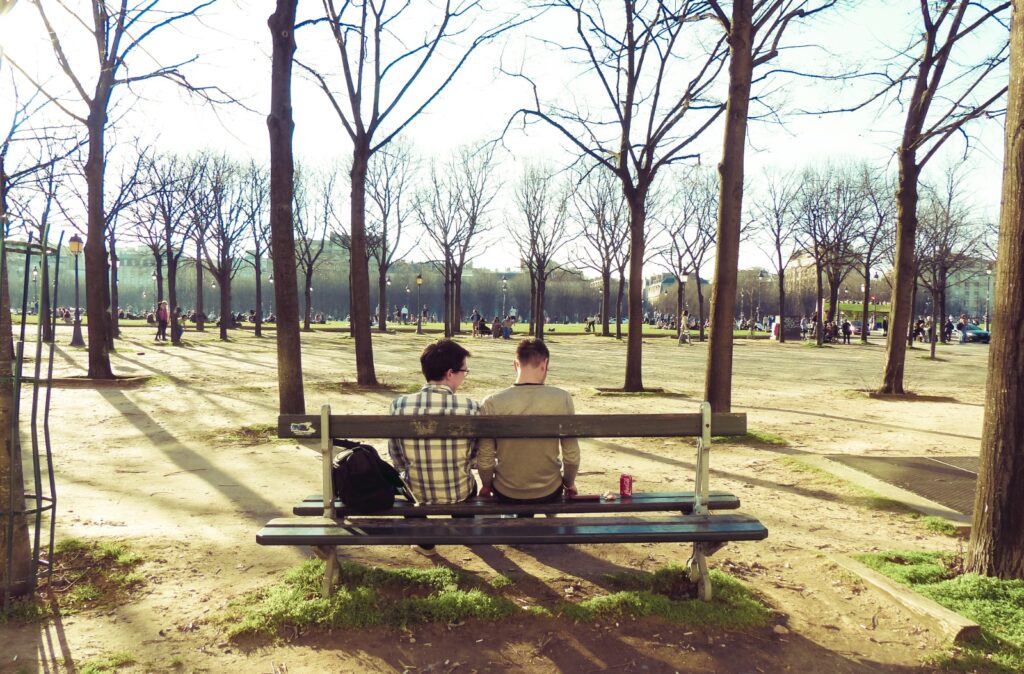
Two figures sit on a park bench in the pale afternoon, backs turned to the camera, shoulders nearly touching. Around them, winter trees cast long shadows. The city is present but distant. Nothing spectacular happens — and yet everything happens. They share a horizon. They choose to remain.
Love is not the red gloss
of a window display in February.
It is the bench in late light
where we decide not to leave.
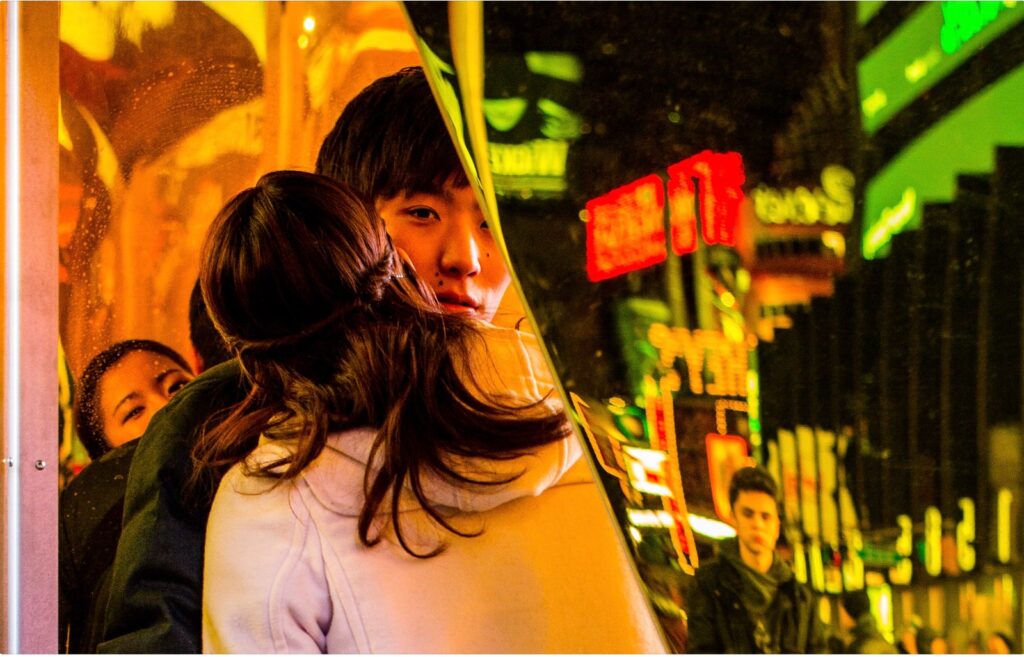
In another frame, a couple folds into each other under neon reflections. The city multiplies their embrace in glass and color. Love here is almost defiant — a body insisting on contact in a world of spectacle. It does not ask permission. It does not apologize for its intensity.
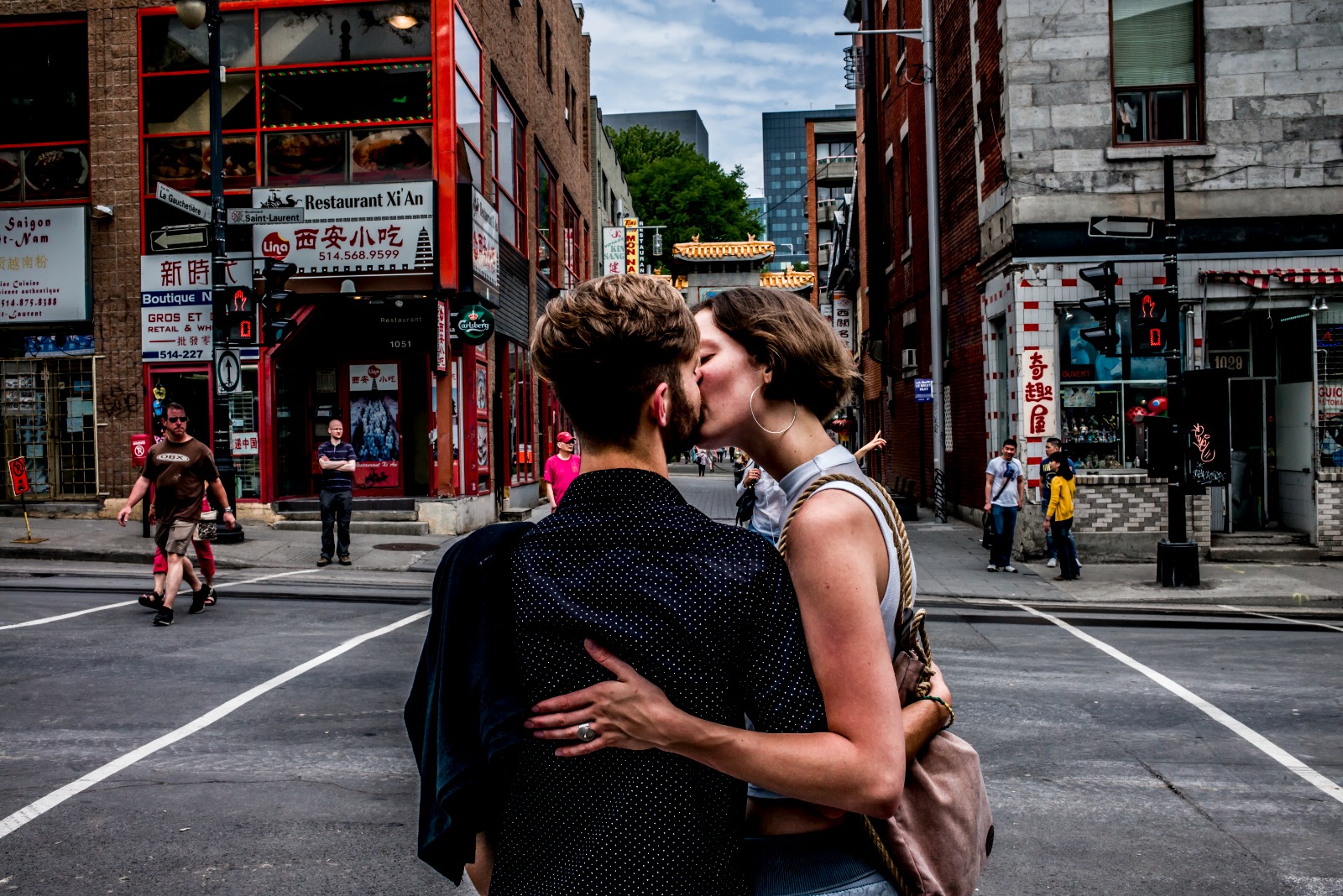
Love is also sex. Not as cliché, not as consumption, but as voltage. As skin daring another skin. As breath disrupting rhythm. In the street scene, a kiss lands without hesitation, public and unapologetic. Her body leans forward; his hand finds her waist. A leg lifts, hooks, claims space in the middle of the parc. The gesture is not polite. It is provocation. It is the body saying: I want you, here, now, despite the traffic lights, despite the watching city.
It is the city crossing itself
with white lines and warning signs,
and still —
two mouths refuse the traffic.
Love redraws the map.
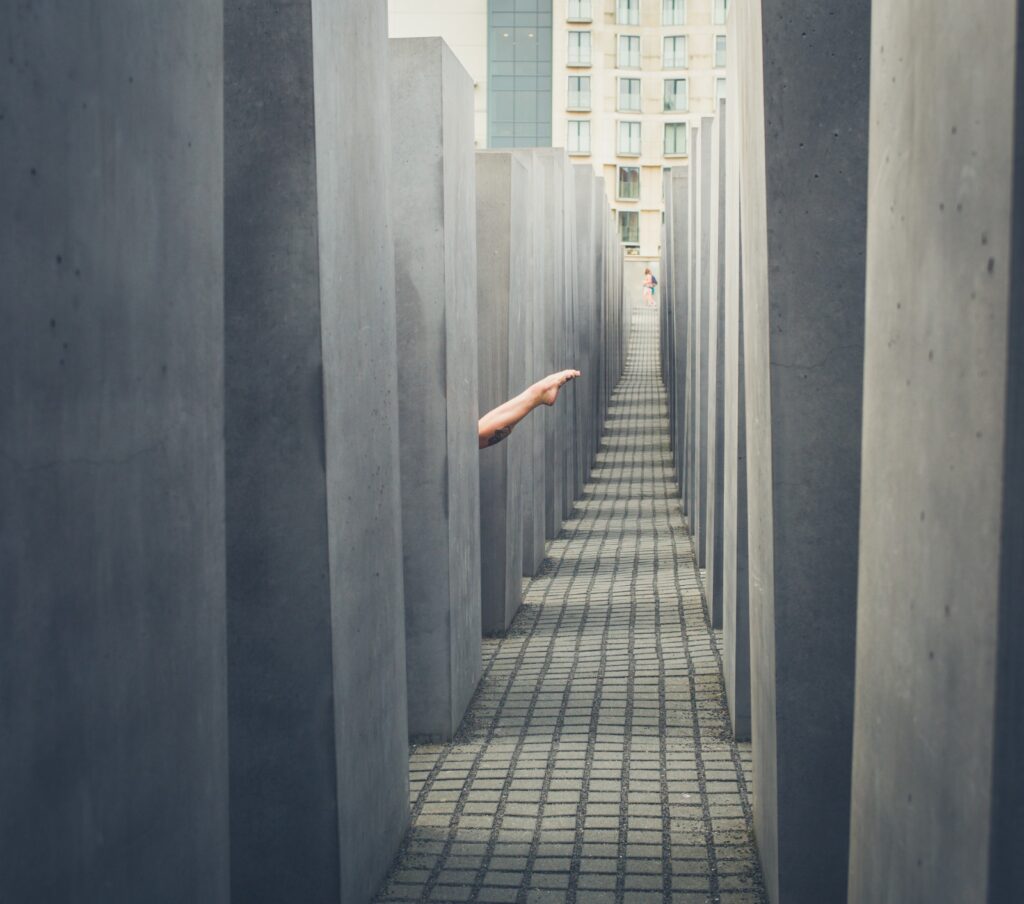
Further on, concrete slabs rise like a rigid architecture of separation. A hand extends between them — uncertain, searching. Love is not comfort; it is the willingness to reach into corridors designed for distance. It is craziness in the best sense: acting against the geometry of isolation.
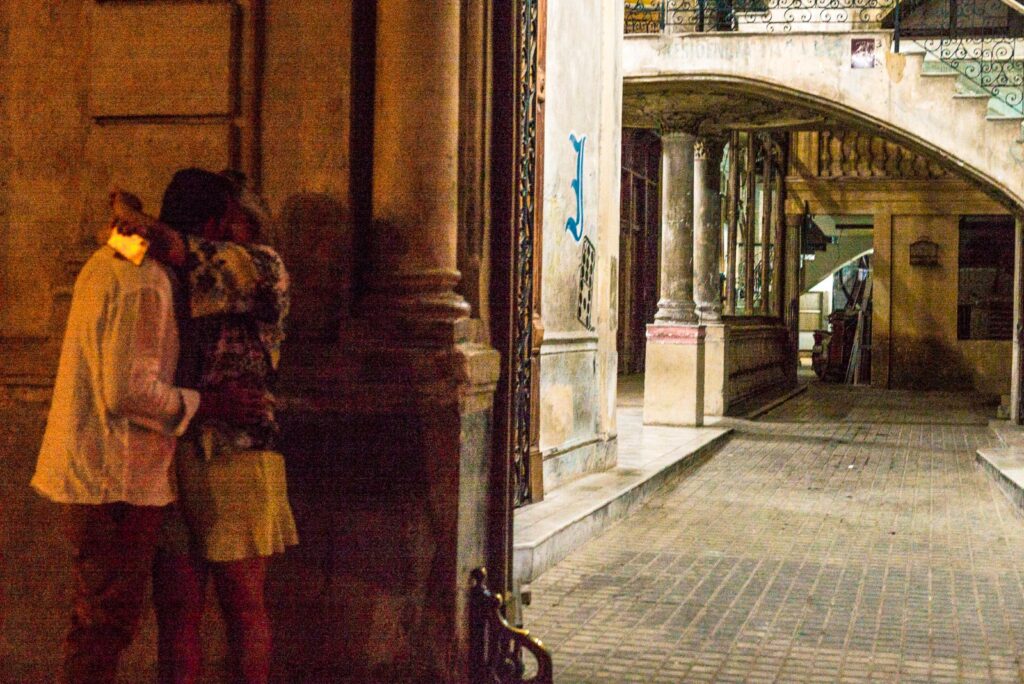
An old arcade holds two silhouettes leaning toward each other at the threshold of a doorway. Half shadow, half exposure. Love stands in that in-between space. It does not wait for ideal conditions.
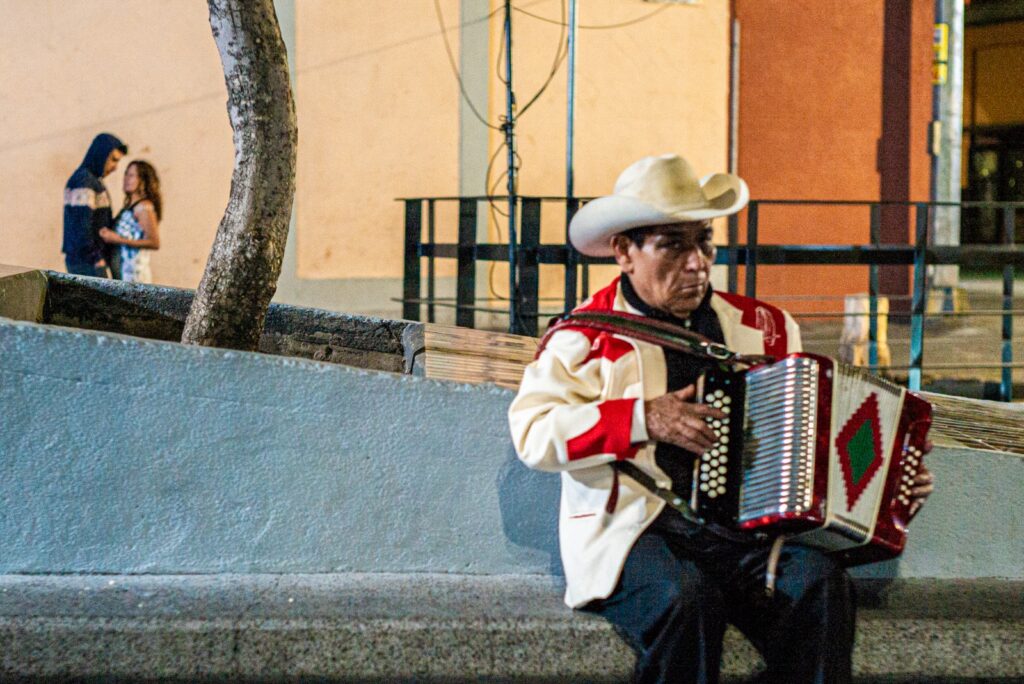
Then there is the street musician seated at dusk, his accordion bright against the cool stone. He plays not for applause but for the possibility that someone, somewhere, might pause. His music stretches across the plaza, creating a temporary bridge between strangers. Love is proximity carried by sound — an offering without guarantee.
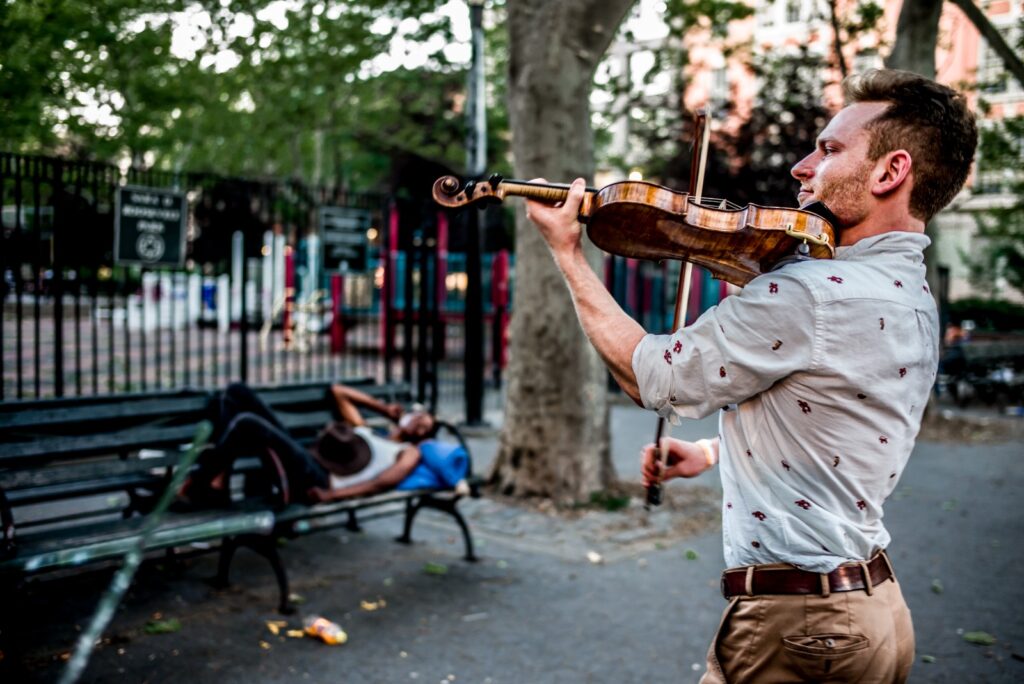
And in the park edged by iron fences and trees, a violinist plays with fierce concentration. His body leans into the instrument, bow cutting the air with urgency. A few steps away, someone lies stretched across a bench, drifting between sleep and wakefulness. The musician does not stop. He plays as if the sound itself were an act of defiance.